On a Tuesday that felt like any other in the bear market’s relentless void, a quiet tremor shook the crypto cognoscenti. SpaceX, Elon Musk’s rocket behemoth and a symbol of frontier ambition, saw its stock plummet 40% to $81—below its IPO price. The markets barely blinked; they were too busy watching Bitcoin hover 60% below its peak. But for those of us who have spent years curating the soul of decentralization, this was not just a stock story. It was a parable about vulnerability, about the lies we tell ourselves when we wrap digital gold in corporate balance sheets.
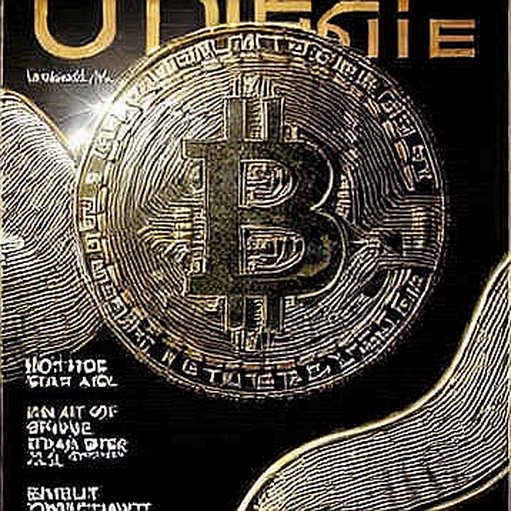
SpaceX holds 18,712 Bitcoin. That sum, worth roughly $1.2 billion at current prices, sits on its books as a treasury asset—a badge of belonging to the elite club of corporate hodlers. Yet the stock’s collapse reveals a cruel irony: the Bitcoin didn’t save the company, and the company’s distress now threatens to turn that hoard into a ticking sell order. In a world of derivative clones, where every institutional investor parrots the “digital gold” narrative, we must ask: What happens when the gold itself becomes a liability?
Let me step back. The corporate Bitcoin treasury story began in earnest with MicroStrategy’s Michael Saylor in 2020, who turned his software company into a leveraged Bitcoin fund. Then came Tesla, Square, and a dozen others. The pitch was seductive: Bitcoin is a superior store of value, immune to inflation, and holding it signals visionary management. For a while, it worked. MicroStrategy’s stock tracked Bitcoin’s rise, and the narrative became self-reinforcing. But the 2022-2023 bear market cracked that mirror. Now SpaceX, a private company with enormous capital needs, shows that even the most visionary treasury can become an anchor.
SpaceX’s stock decline stems from its core business: the Starlink satellite internet unit is burning cash, and the Starship rocket program faces delays. The Bitcoin holdings are a sideshow—a hedge that failed to hedge. In my own work as a DAO governance architect, I’ve seen how treasuries become sacred cows. We treat them as immutable reserves, but they are only as strong as the organization’s survival. When a company’s operating cash flow turns negative, every liquid asset is a potential target. And 18,712 BTC is very liquid.
The market knows this. That’s why the threat of forced selling looms. If SpaceX needs to raise cash for payroll or debt payments, selling Bitcoin is the easiest lever. The impact would be limited—18k BTC is less than a day’s average trading volume—but the psychological damage would be immense. It would shatter the myth that corporate Bitcoin holders are diamond hands. It would show that when survival calls, Bitcoin becomes just another commodity to dump.
But there’s a deeper lesson here, one that resonates with my own experience of watching the ICO boom collapse. In 2017, I wrote about tokenized equity as digital citizenship. I believed that blockchain could create new forms of value aligned with community, not just speculation. The corporate treasury trend was always a bastardization of that vision—it turned Bitcoin into a corporate asset rather than a public good. Now, SpaceX’s struggle exposes the flaw: centralizing Bitcoin on a company’s balance sheet links its fate to that company’s failures. It’s the opposite of decentralized resilience.
From a technical perspective, the risk is straightforward. Imagine a wallet with a known SpaceX tag suddenly moving 1,000 BTC to a exchange. That would trigger panic. The market would assume a cascade. The basis in futures would widen, and options would price in tail risk. We’ve seen this before: when the German government sold seized Bitcoin earlier this year, the market dipped. But that was a one-time event. A corporate fire sale could be ongoing, unpredictable, and corrosive to confidence.
Yet the contrarian in me, the part that has survived three bear markets by questioning every narrative, sees an opportunity. This event could be the catalyst that forces a reckoning. If SpaceX or any major corporate holder sells, it would remove a weak hand from the market. It would purify the ownership structure, returning Bitcoin to the hands of individuals and protocols that truly believe. In the long run, that’s healthy. I remember sitting in a MakerDAO governance call in 2020, arguing against whale-favoring risk parameters. The whales wanted stability; I wanted equity. In the end, the system survived because it absorbed shocks and redistributed power. The Bitcoin network will survive the disposal of 18k coins. It has survived worse.
What worries me more is the emotional blow to the “institutional adoption” narrative. For the past two years, crypto evangelists have pointed to corporate treasuries as proof of Bitcoin’s legitimacy. Now, the flagship example is bleeding. The stock is down. The CEO is distracted. The Bitcoin is at risk. This will feed the FUD—fear, uncertainty, and doubt—that regulators love to weaponize. It will make it harder for new companies to justify Bitcoin holdings to their boards. It will slow the adoption curve.
But adoption was never about corporate balance sheets anyway. Real adoption happens when a Salvadoran farmer uses Lightning to buy corn, or when a Nigerian freelancer bypasses capital controls. Those stories don’t make headlines, but they build the foundation. SpaceX’s stock crash is a distraction from that truth. We must not let it derail the deeper mission of economic sovereignty.
In my years of designing DAO governance structures, I’ve learned that resilience comes from redundancy and distribution. The same applies to Bitcoin ownership. If a single company holds a large stack, that’s centralization, no matter how decentralized the underlying asset is. The solution is not to vilify corporate holdings but to encourage protocols like Uniswap or Aave to become treasury managers, or to promote Bitcoin-native DeFi that allows companies to borrow against their BTC without selling. That’s the next frontier.
For now, the immediate signal is clear: watch the SpaceX-linked wallets. If there’s a movement, it will be a moment of truth. I’ll be watching with the same mix of dread and curiosity I felt when the Terra collapse unfolded—the sense of witnessing a myth die in real time. Myths die hard, but they leave behind seeds of renewal.
This is the essence of curating the soul in a world of derivative clones. We must look beyond the surface of price and narrative. We must see the organizational fragility beneath the digital shine. SpaceX’s stock collapse is not the end of Bitcoin. It’s an invitation to rethink what we mean by “treasury” and “value.” Bitcoin was never meant to be a corporate reserve. It was meant to be a sovereign escape from the very institutions that now try to own it.
Curation is not about preservation; it is about ruthless honesty. When the market’s mirror cracks, we see our own reflection. And in the bear’s silence, we find the truth of our convictions.
I’ll close with a question: If a company that builds rockets to Mars cannot trust its Bitcoin treasury to defend its stock, what does that say about the narrative we have been selling? Perhaps the true orbit is not around a corporate balance sheet but around a peer-to-peer network that belongs to no one. That is where the soul of this technology lives.
Curating the soul in a world of derivative clones.
When the market’s mirror cracks, we see our own reflection.
In the bear’s silence, we find the truth of our convictions.